Showing all 4 resultsSorted by latest

  • Tork Craft Dia. Blade 300X12X25.4Mm Gen. Purp. Hot Pressed Segmented

    Tork Craft Dia. Blade 300X12X25.4Mm Gen. Purp. Hot Pressed Segmented

    R982,30

    Diamond blade


    TYPE:

    Hot pressed, long life and segmented.

    DIAMETER: ø300mm
    BORE: Ø25.4mm
    MAX RPM: 5,000
    USE: Brick, concrete, cement block, granite, fiber cement,
    stone and other masonry

    What is a diamond blade?

    A diamond blade is composed of a circular steel core and the diamond
    impregnated segments. The segments are seperated by slots in the core.

    These
    slots assist in cooling the blade during operation by allowing water (wet
    cutting) or air (dry cutting) to flow between the segments. The segments or rims
    are a mixture of diamond powder and metal powders. The diamonds are industrial
    diamonds of different sizes and qualities depending on the material to be cut as
    well a the blade type.

    How does a diamond blade work?

    The individual diamond crystals exposed on the leading edge and the sides of
    the segment or rim carry out the cutting. The operator pushes the rotating blade
    into the material and the surface diamonds thus exposed mill a groove in the
    material. When the blade mills the material, the latter exerts wear on the
    blade. During cutting the exposed diamonds may crack
    or break. The material simultaneously starts to abrade the metal matrix, which
    releases more diamonds.

    The more abrasive the material, the more rapid
    the tendency to wear down the matrix. Blades for cutting hard, denseless
    abrasive materials (such as tile, bricks, stone or cured concrete), require
    a softer metal matrix.

    This will wear down faster, replacing the worn diamonds
    fairly quickly so that the blade continues to cut.

    Blades for cutting soft,
    abrasive materials (such as green concrete and asphalt), must have  a hard,
    abrasion-resistant metal matrix in order to retain the diamonds for a longer
    time.

    Water will prevent the blade from overheating:

    It will greatly reduce the amount of harmful dust created by cutting. Remove the
    slurry from the cut, and extend the life of the blade.
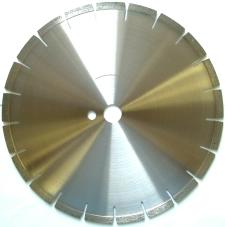
  • Tork Craft Diamond Blade 300 X 25.4Mm Segmented

    Tork Craft Diamond Blade 300 X 25.4Mm Segmented

    R970,85

    Diamond blade


    TYPE:

    Hot press and segmented.

    DIAMETER: ø300mm
    BORE: Ø25.4mm
    MAX RPM: 6,400
    USE: Brick, concrete, cement block, granite, fiber cement,
    stone and other masonry

    What is a diamond blade?

    A diamond blade is composed of a circular steel core and the diamond
    impregnated segments. The segments are seperated by slots in the core.

    These
    slots assist in cooling the blade during operation by allowing water (wet
    cutting) or air (dry cutting) to flow between the segments. The segments or rims
    are a mixture of diamond powder and metal powders. The diamonds are industrial
    diamonds of different sizes and qualities depending on the material to be cut as
    well a the blade type.

    How does a diamond blade work?

    The individual diamond crystals exposed on the leading edge and the sides of
    the segment or rim carry out the cutting. The operator pushes the rotating blade
    into the material and the surface diamonds thus exposed mill a groove in the
    material. When the blade mills the material, the latter exerts wear on the
    blade. During cutting the exposed diamonds may crack
    or break. The material simultaneously starts to abrade the metal matrix, which
    releases more diamonds.

    The more abrasive the material, the more rapid
    the tendency to wear down the matrix. Blades for cutting hard, denseless
    abrasive materials (such as tile, bricks, stone or cured concrete), require
    a softer metal matrix.

    This will wear down faster, replacing the worn diamonds
    fairly quickly so that the blade continues to cut.

    Blades for cutting soft,
    abrasive materials (such as green concrete and asphalt), must have  a hard,
    abrasion-resistant metal matrix in order to retain the diamonds for a longer
    time.

    Water will prevent the blade from overheating:

    It will greatly reduce the amount of harmful dust created by cutting. Remove the
    slurry from the cut, and extend the life of the blade.

  • Tork Craft Diamond Blade 230Mm Segmented Hot Pressed

    Tork Craft Diamond Blade 230Mm Segmented Hot Pressed

    R545,22

    Diamond blade


    TYPE:

    Hot press and segmented.

    DIAMETER: ø230mm
    BORE: Ø22.23mm
    MAX RPM: 6,600
    USE: Brick, concrete, cement block, granite, fiber cement,
    stone and other masonry

    What is a diamond blade?

    A diamond blade is composed of a circular steel core and the diamond
    impregnated segments. The segments are seperated by slots in the core.

    These
    slots assist in cooling the blade during operation by allowing water (wet
    cutting) or air (dry cutting) to flow between the segments. The segments or rims
    are a mixture of diamond powder and metal powders. The diamonds are industrial
    diamonds of different sizes and qualities depending on the material to be cut as
    well a the blade type.

    How does a diamond blade work?

    The individual diamond crystals exposed on the leading edge and the sides of
    the segment or rim carry out the cutting. The operator pushes the rotating blade
    into the material and the surface diamonds thus exposed mill a groove in the
    material. When the blade mills the material, the latter exerts wear on the
    blade. During cutting the exposed diamonds may crack
    or break. The material simultaneously starts to abrade the metal matrix, which
    releases more diamonds.

    The more abrasive the material, the more rapid
    the tendency to wear down the matrix. Blades for cutting hard, denseless
    abrasive materials (such as tile, bricks, stone or cured concrete), require
    a softer metal matrix.

    This will wear down faster, replacing the worn diamonds
    fairly quickly so that the blade continues to cut.

    Blades for cutting soft,
    abrasive materials (such as green concrete and asphalt), must have  a hard,
    abrasion-resistant metal matrix in order to retain the diamonds for a longer
    time.

    Water will prevent the blade from overheating:

    It will greatly reduce the amount of harmful dust created by cutting. Remove the
    slurry from the cut, and extend the life of the blade.

  • Tork Craft Diamond Blade 115Mm Segmented Hot Pressed Contractor

    Tork Craft Diamond Blade 115Mm Segmented Hot Pressed Contractor

    R155,00

    Diamond blade


    TYPE:

    Hot press and segmented.

    DIAMETER: ø115mm
    BORE: Ø22.23mm
    MAX RPM: 13,000
    USE: Marble, granite, concrete, masonry

    What is a diamond blade?

    A diamond blade is composed of a circular steel core and the diamond
    impregnated segments. The segments are seperated by slots in the core.

    These
    slots assist in cooling the blade during operation by allowing water (wet
    cutting) or air (dry cutting) to flow between the segments. The segments or rims
    are a mixture of diamond powder and metal powders. The diamonds are industrial
    diamonds of different sizes and qualities depending on the material to be cut as
    well a the blade type.

    How does a diamond blade work?

    The individual diamond crystals exposed on the leading edge and the sides of
    the segment or rim carry out the cutting. The operator pushes the rotating blade
    into the material and the surface diamonds thus exposed mill a groove in the
    material. When the blade mills the material, the latter exerts wear on the
    blade. During cutting the exposed diamonds may crack
    or break. The material simultaneously starts to abrade the metal matrix, which
    releases more diamonds.

    The more abrasive the material, the more rapid
    the tendency to wear down the matrix. Blades for cutting hard, denseless
    abrasive materials (such as tile, bricks, stone or cured concrete), require
    a softer metal matrix.

    This will wear down faster, replacing the worn diamonds
    fairly quickly so that the blade continues to cut.

    Blades for cutting soft,
    abrasive materials (such as green concrete and asphalt), must have  a hard,
    abrasion-resistant metal matrix in order to retain the diamonds for a longer
    time.

    Water will prevent the blade from overheating:

    It will greatly reduce the amount of harmful dust created by cutting. Remove the
    slurry from the cut, and extend the life of the blade.